





Lee Brooks
Software Engineering

Simon Bones
Chief Executive

Robin Hodge
Non - Residential Heating/Building Services



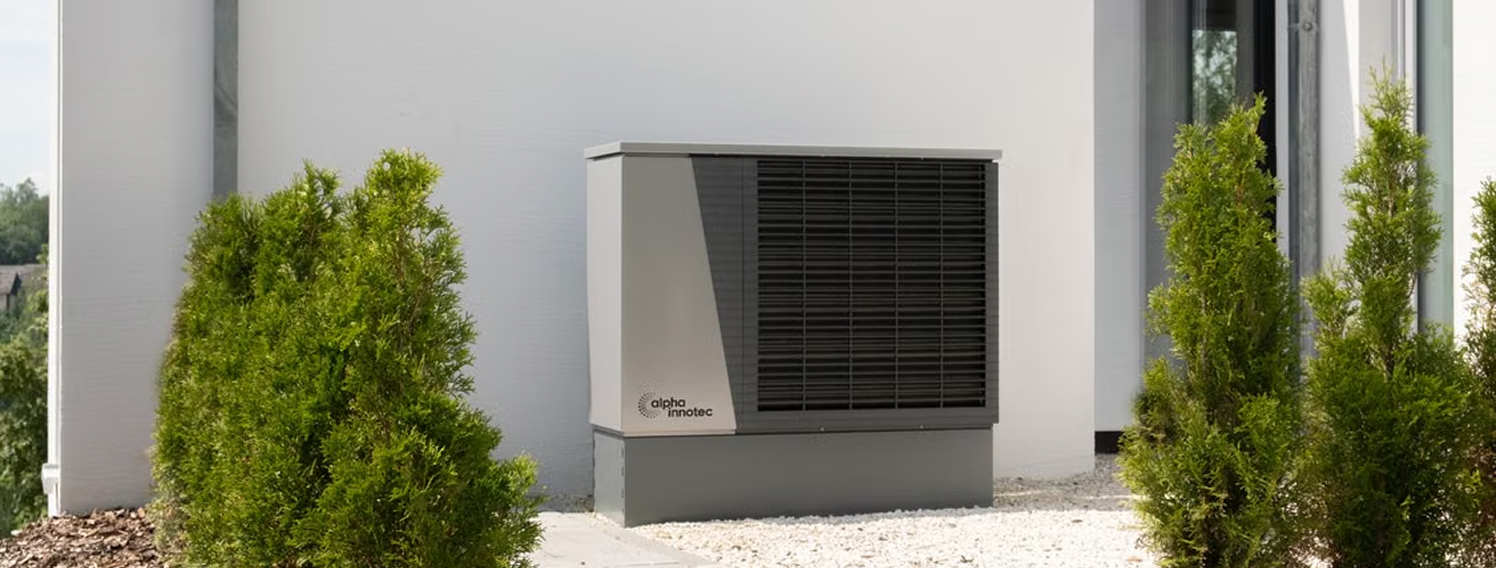
Efficient, low-carbon heating designed around your property—even if it’s older or harder to heat.
A heat pump heats your home and hot water using electricity to ‘pump’ warmth from the outside air or the ground, even when the air or ground is colder than your home. For every unit of electricity it uses, a good heat pump running at a sensible flow temperature it typically delivers around four three units of heat (whereas modern boilers generally product 0.87 - 0.89 units of heat for every unit of energy in the fuels they run off).
Designed properly, heat pumps can work in it works in older homes - even those that are poorly insulated, though if there are cost-effective insulation steps that you can take we would generally suggest these alongside the heat pump too. The Home Check shows what your home needs first.
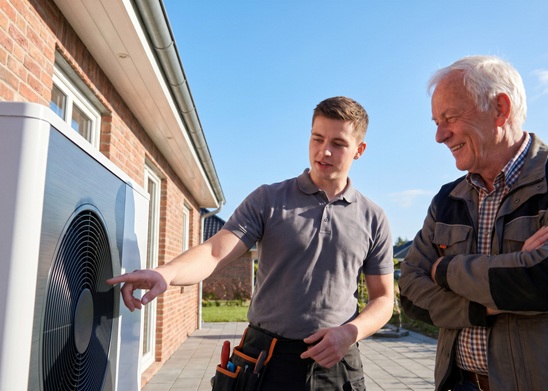
Heat pumps work like a fridge or air-conditioner working backwards. They work most efficiently when the water they heat is cooler, so we run radiators at a lower temperature than you would with a normal boiler (underfloor heating is exactly the same), which means we may need to upgrade some radiators. But don’t worry, we do a full room-by-room assessment of heat losses and radiator sizes to ensure we can heat each room to the temperature you need.
Very likely, yes. A common myth is that heat pumps only work in new, well-insulated homes. In practice, they work well in older homes when the system is designed for the house, with the right size of heat pump and the right radiators. Problems usually come from systems that were sized or designed poorly, not from the age of the house. One thing that heat pumps are not good at, though, is rapidly heating buildings that have been left to get cold. If you are out a lot of the day and let your home cool down and then are used to reheating it just before you get home, that is not something that most heat pumps find easy - but if you like to keep the property warm through the day, with only minor variations, then you’ll find a heat pump much like a boiler. Heat pumps tend to work best financially as part of a holistic installation and, while they may save you money overall, their efficiency varies through the year, so if high winter bills are a problem (even when offset against low summer bills) then they are probably not for you. If you have a property with a high heat load then you may need enabling works and/or multiple units, which can be expensive, albeit the savings tend to be bigger as load gets bigger. Ultimately, we only want to install if the project suits your needs; we’re not afraid to recommend not proceeding, which makes us unusual!
Yes. Your hot water is heated separately from your radiators and stored in a cylinder, so it gets hot enough for a hot shower or bath. We typically need to change a hot water cylinder - and a heat pump doesn’t work like a combi boiler, so we will need a cylinder, because the heat exchanger coils in most cylinders aren’t big enough, but we can ensure you have as much hot water as you need, and we store it at temperatures hotter than you’ll want for a bath or shower (though we do also run periodic extra heating runs to protect from legionella).
Air source heat pumps take heat from the outside air. Ground source heat pumps take it from the ground, through pipes laid in trenches or boreholes. Both work well. Air source is simpler and cheaper to install, so it suits most homes. Ground source has the advantage that the ground doesn’t get as cold in the winter as the outside air, so it’s an easier job to extract heating from it, but it needs a lot of outdoor space or boreholes and tends to be much more expensive. We can install either but 9 times out of 10 an air-source heat pump is the right answer.
Following a Home Check, a full heat pump, solar, battery, and EV package typically costs £18,000–£25,000 with grant support.
Not means-tested and never needs repaying. If your property qualifies, you get the subsidy and we collect it for you.
Access the government’s Warm Homes Loan Scheme to spread upfront costs. (Genous is not FCA-authorised to advise on loans.)
Real words from homeowners, schools and businesses we've worked with.

We’ve had plenty of positive feedback, in terms of how the installs have gone, the conduct of the installers and their professionalism, and the performance has been good. That’s always been a positive feedback from our residents, in terms of the feel, in terms of its temperature especially during the winter months. It’s been really beneficial from us as a council.
Straight answers to the questions we hear most often about solar PV for homes.
Some can. See smart cooling.
That depends. Many heat pumps can run ‘backwards’, sending cool air or water round the property in the summer, but there are different ways this can work. It’s not as easy for most people of just running in reverse, as condensation can become a problem and radiators may be big enough to heat but not to cool, but we can advise and, in some cases, a combination of options can deliver some level of smart cooling.
A modern gas boiler is around 87 to 89% efficient, meaning it turns slightly less than one unit of fuel into one unit of heat. A heat pump typically delivers around four units of heat for every unit of electricity, though the exact figure depends on your home and how the system is designed.
Yes. A heat pump should use around a quarter or less of the energy of a fossil fuel boiler and as the electricity grid gets greener the emissions per kWh will get lower, which doesn’t happen with fossil fuels, the main emissions of which are the CO2 they product. For most households, a heat-pump is the biggest opportunity to reduce emissions associated with their homes.
Outside your home, somewhere with good airflow and few obstructions. We do need space in front of and to the side of the units, and not in restricted areas like lightwells.
All heating systems make some noise (including a boiler), and different heat pumps make different levels of noise. We have to pass various noise regulations for a heat pump to class as permitted development, but those relate to noise at your near neighbours’ properties, but we can discuss noise with you if you are worried about it - in general, something between a fridge and a dishwasher is what to expect.